Rotator Cuff Injury
Rotator Cuff Injury
What are Rotator Cuff Injury?
The rotator cuff is a group of muscles and tendons that surround the shoulder joint, keeping the head of your upper arm bone firmly within the shallow socket of the shoulder. A rotator cuff injury can cause a dull ache in the shoulder, which often worsens when you try to sleep on the involved side.
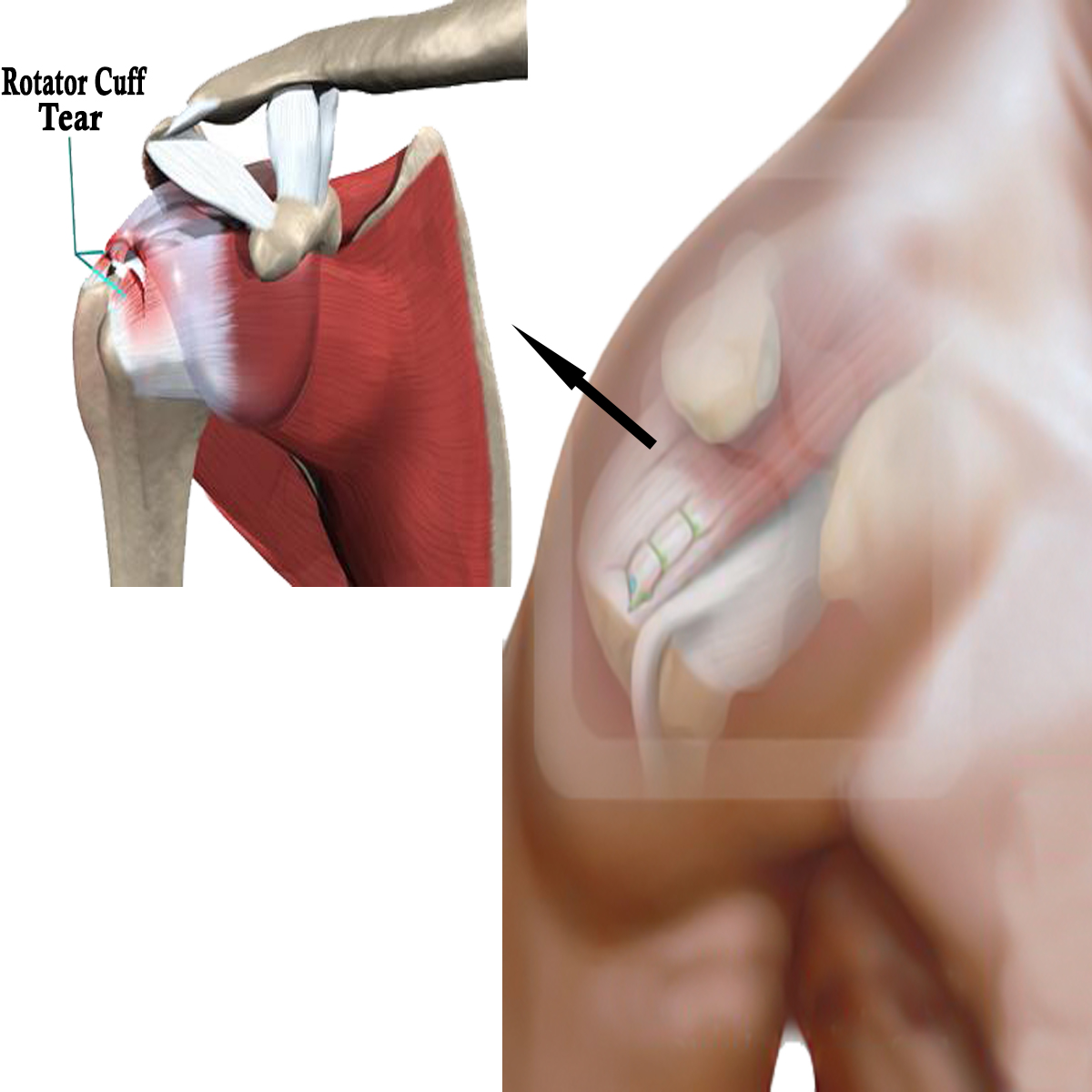
What are the symptoms of Rotator Cuff Injury?
The pain associated with a rotator cuff injury may:
- Be described as a dull ache deep in the shoulder
- Disturb sleep, particularly if you lie on the affected shoulder
- Make it difficult to comb your hair or reach behind your back
- Be accompanied by arm weakness
What are the causes of Rotator Cuff Injury?
Rotator cuff disease may be the result of either a substantial injury to the shoulder or to progressive degeneration or wear and tear of the tendon tissue. Repetitive overhead activity, heavy lifting over a prolonged period of time, and the development of bone spurs in the bones around the shoulder may irritate or damage the tendon.
Risk factors
The following factors may increase your risk of having a rotator cuff injury:
- Age. As you get older, your risk of a rotator cuff injury increases. Rotator cuff tears are most common in people older than 40.
- Certain sports. Athletes who regularly use repetitive arm motions, such as baseball pitchers, archers and tennis players, have a greater risk of having a rotator cuff injury.
- Construction jobs. Occupations such as carpentry or house painting require repetitive arm motions, often overhead, that can damage the rotator cuff over time.
- Family history. There may be a genetic component involved with rotator cuff injuries as they appear to occur more commonly in certain families.
How is Rotator Cuff Injurytreated?
Conservative treatments — such as rest, ice and physical therapy — sometimes are all that's needed to recover from a rotator cuff injury. If your injury is severe and involves a complete tear of the muscle or tendon, you might need surgery.
Injections
If conservative treatments haven't reduced your pain, your doctor might recommend a steroid injection into your shoulder joint, especially if the pain is interfering with your sleep, daily activities or exercise. While such shots are often helpful, they should be used judiciously, as they can contribute to weakening of the tendon.
Therapy
Physical therapy exercises can help restore flexibility and strength to your shoulder after a rotator cuff injury. Sometimes it is possible to eliminate pain and restore function without surgery.
Surgery
Many different types of surgeries are available for rotator cuff injuries, including arthroscopic tendon repair, open tendon repair, bone spur removal, tendon transfer and shoulder replacement.
Disclaimer
This article is for information only and should not be used for the diagnosis or treatment of medical conditions. Doctors Catalog has used all reasonable care in compiling the information but makes no warranty as to its accuracy. Consult a doctor or other health care professional for diagnosis and treatment of medical conditions. In the event of an emergency, please call 108 for immediate assistance.