Spinal stenosis
Spinal stenosis
What are Spinal stenosis?
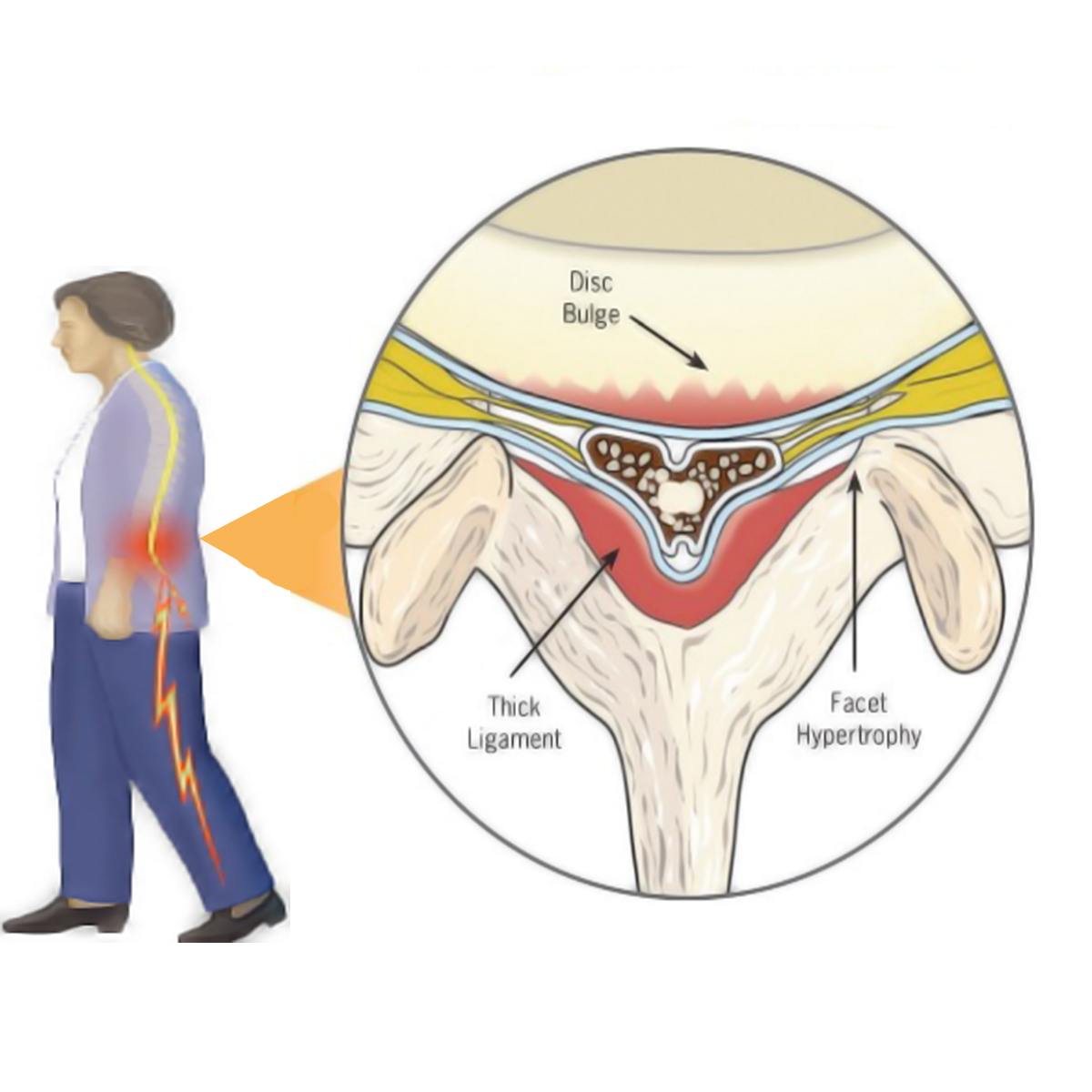
Spinal stenosis is a condition, mostly in adults 50 and older, in which your spinal canal starts to narrow. This can cause pain and other problems. Your spine is made up of a series of connected bones (or “vertebrae”) and shock-absorbing discs. It protects your spinal cord, a key part of the central nervous system that connects the brain to the body. The cord rests in the canal formed by your vertebrae.
What are the symptoms of Spinal stenosis?
Spinal stenosis usually affects your neck or lower back. Not everyone has symptoms, but if you do, they tend to be the same: stiffness, numbness, and back pain .
More specific symptoms include:
- Sciatica. These shooting pains down your leg start as an ache in the lower back or buttocks.
- Foot drop. Painful leg weakness may cause you to “slap” your foot on the ground. A hard time standing orwalking. When you’re upright, it tends to compress the vertebrae, causing pain. Loss of bladder or bowel control. In extreme cases, it weakens the nerves to the bladder or bowel.
- Herniated discs. If the cushions are cracked, material can seep out and press on your spinal cord or nerves.
- Injuries. An accident may fracture or inflame part of your spine.
- Tumors. If cancerous growths touch the spinal cord, you may get stenosis.
- Paget’s disease. With this condition, your bones grow abnormally large and brittle. The result is a narrowing of the spinal canal and nerve problems.
What are the causes of Spinal stenosis?
The leading reason for spinal stenosis is arthritis, a condition caused by the breakdown of cartilage -- the cushiony material between your bones -- and the growth of bone tissue.
Osteoarthritis can lead to disc changes, a thickening of the ligaments of the spine , and bone spurs . This can put pressure on your spinal cord and spinal nerves.
Other causes include:
Some people are born with spinal stenosis or diseases that lead to it. For them, the condition usually starts to cause problems between the ages of 30 and 50.
How is Spinal stenosistreated?
Medication: Common pain remedies such as aspirin , acetaminophen(Tylenol) , ibuprofen (Advil, Motrin ), and naproxen can offer short-term relief. All are available in low doses without a prescription. Other medications, including muscle relaxants and antiseizure medications, treat aspects of spinal stenosis, such as muscle spasms and damaged nerves.
Corticosteroid injections: Your doctor will inject a steroid such as prednisone into your back or neck. Steroids make inflammation go down. However, because of side effects, they are used sparingly.
Anesthetics: Used with precision, an injection of a “nerve block” can stop pain for a time.
Exercise: You can improve your flexibility, strength, and balance with regular activity. Your doctor may recommend a physical therapist to help you.
Assistive devices: You might get braces , a corset, or a walker to help you move about.
Surgery Some people have severe cases. They struggle to walk or have issues with their bladder and bowel. Doctors may recommend surgery for these people. Procedures such as laminectomy and laminoplasty create space between the bones so inflammation can go down. Surgery carries its own risks. You should have a talk with your doctor about how much it can help, recovery time, and more before taking that step. Many patients also try nontraditional therapies, including chiropractic: and acupuncture. Again, be sure your doctor knows if you’re trying a nontraditional approach.
Disclaimer
This article is for information only and should not be used for the diagnosis or treatment of medical conditions. Doctors Catalog has used all reasonable care in compiling the information but makes no warranty as to its accuracy. Consult a doctor or other health care professional for diagnosis and treatment of medical conditions. In the event of an emergency, please call 108 for immediate assistance.